Buckets for Elevators – Steel or Plastic?

Bucket elevator

Many buyers of buckets for elevators, have concerns about replacing their steel buckets with plastic. The question of whether static electricity generated when using plastic buckets and the subsequent danger of dust explosion is often mentioned. Here are some facts to consider before making up your mind:

As regards Static Electricity:

  • A static conducive belt may be used in an elevator whereby the static is conducted into the pulleys.
  • Elevator buckets do not generate enough static to supersede the conductivity rating of a static conductive belt (usually 300 Mega Ohms).
  • All static electricity that the bucket does generate is discharged through the elevator bolts into the pulleys of the elevator which would always be grounded.
  • As for dust explosion it should be borne in mind that spark caused by static, or “cold spark”, does not have the necessary energy to ignite a dust explosion.  Only a “hot spark”, one caused by scraping metal on metal, has enough energy to start a dust explosion.


Steel buckets versus Plastic buckets:

  • Plastic buckets are non-sparking
  • Plastic buckets are non-corrosive
  • Plastic buckets will flex when they encounter an obstacle, allowing the bucket to pass through without damage, they then return to their original shape.  Steel buckets will dent and loose capacity; the deformation of steel buckets also increases the risk of spark by scraping the casing or another metal object placed near the buckets.
  • Fixing or changing a damaged steel bucket requires costly down-time and labor.
  • Using the proper plastic is for the specific application, bucket life should be as good or greater in most applications.  Stainless steel can for instance be replaced with Nylon or Urethane (the most resistant plastics) at a fraction of the cost.
  • Plastic buckets also have important weight savings that can reduce cost by being able to use a lighter elevator belt. It also improves the life of other drive components in the elevator.
  • Polyethylene and Urethane are approved for use in food applications by the FDA in the United States whereas steel buckets are often not.
  • Nylon, polyethylene and polyurethane buckets are usually substantially less expensive than steel to start with.
  • Light weight plastic buckets with a low profile cut can be placed closer together, thus enhancing capacity over and above the previous heavy steel buckets.

Grain Drying, Handling & Storage Handbook

Grain handling, silo

Still, some copies left from the last consignment. If you think about grain storage, buy the book first. It’s now selling at R220 including VAT, still the best bargain of your life.

One of the many valuable tables in this publication shows the relationship of grain temperature and moisture content to storage in days as below. Important to note that once any period of the grain’s life is spent through poor storage conditions, only the proportionate remaining days are left under improved conditions. (See our lead piece above.)

Storage days at various temperatures and moisture content
Grain Moisture content, % on wet basis        
                 
Temp °C 15.5 18 20 22 24 26 28 30
-1.1 2,276 648 321 190 127 94 74 61
1.6 1,517 432 214 126 85 62 49 40
4.4 1,012 288 142 84 56 41 32 27
7.2 674 192 95 56 37 27 21 18
10 450 128 63 37 25 18 14 12
12.7 299 85 42 25 16 12 9 8
15.5 197 56 28 17 11 8 7 5
18.3 148 42 21 13 8 6 5 4
21.1 109 31 16 9 6 5 4 3
23.8 81 23 12 7 5 4 3 2
26.6 60 17 9 5 4 3 2 2

Working the niches

Safflower

Introducing SAFFLOWER. Ever heard of it? Maybe “Carthamus Tinctorius” rings a bell? Known as the world’s most ancient crop, it has excellent oxidative stability, presses easily, has a high yield on marginal land, has a nutty odour & taste and light yellow in colour with 90 – 95% unsaturated fats and a great source of linoleic acid, an essential fatty acid and with a lindeic (C18:2) component of 72 – 80%. It eagerly awaits introduction into this and other up-markets. Traditionally Safflower is an oil originating in the Middle East and still mostly used there. The crop grows well in areas like Colorado in the USA (semi arid) and is rotated there with winter wheat and barley, followed by one fallow year. Never follow on or with sunflower. There are effective herbicides registered in the US for use on Safflower. Trials in North Dakota and Montana indicates that it would out-yield most other crops such as mustard, sunflower, soybean, crambe, flax & rapeseed. Harvest the seeds with a grain header on a combine at 400 – 550RPM and on a 22 inch cylinder. Follow through with pressing the oil.

ABC Hansen has a special offer, on small pressing plants.

Value adding to maize part 2

Corn

When talking about value adding – a subject becoming more and more important to farmers in particular (especially when the maize price is entrenching itself well below the R1,000 per ton mark) –  the conversation often starts and end at milling. It should really start with cleaning and storage, the minimum any farmer can do to add value to his crop. It need not however stop at milling as this business just sometimes does not work whether due to competition or other reasons. While milling is almost always a step in the value adding chain, the many other interesting conversions of maize lies in such areas as:

Starch, gluten, animal feeds, corn syrup, ethanol and other chemicals. What makes it great is that we import into South Africa thousands of tons of these products, they are all intermediate products used in further manufacture such as the textile and paper industries for instance, so marketing takes place on a different level, they are all international commodities and able to be exported easily, brand does not play much of a role as long as quality is assured etc.

Granted, these are all costly plants. The Europeans and Americans maintain that a viable plant capacity is the processing of 300 tons of maize per day at a plant cost of around Euro 20 million. Big bucks. But consider that unmodified yellow maize starch sells for around R4,400 and modified starches for well over R6,000 per ton on the local market. And keep in mind that there is primarily one game in town. Doesn’t it warrant a good research at least? We are of course


The value adding chain for maize would look something like this:

Adding value to maize

Hectoliter Mass

Herewith some tables showing the hectoliter mass of various grains and bulk materials. One of those pieces of information you often need but is not easy to find. We hope it will assist you some day, perhaps tomorrow.

Grain mass vs volume values

Grain mass vs volume alues

Agro Processing – again…. This writeen October 2005 – in February 2005 maize hit an all time low of R483 per ton, wow!!!

Two years ago you had serious thoughts about maize milling or other value adding but then the prices improved & frankly, you’re glad you never went into this even though you’re in the same position again. Old So-and-So just couldn’t make it. At least the soy price improved and there seems to be a market for low fat soy now….. And next year it will be something else.

Very few people actually get any value adding done.  And yes, it is risky, its starting a new business but with the difference that, as a farmer you actually know a great deal about it.

Take soy processing. There are a few ways to go about getting that oil out for low fat soy oil cake namely:

  • Extrusion
  • Roasting
  • Micronising
  • Steam heating
  • Chemical extraction

And each has its own peculiarities, advantages and disadvantages. Bottom line is that for a modest budget of less than R200,000 (today around R500,00) you could actually produce a low fat cake in small quantities of 2 – 10 tons per day. With a +- R600 per ton gross profit and R300 net profit, your equipment is paid for over only 660 tons or some 330 x 20 hour days at only 2 tons per day. A good return in anybody’s book.

And for a plant doing 1.5 tons per hour or 30 tons per day you can expect to pay around R3 million (today closer to R6 million) using the best equipment in the world – an exact same payback – 330 x 20 hour days.

While it is of course not the thing for everyone to do, there is merit in this business, as in many other areas of processing. We used to talk of import substitution and export promotion as ways for a country to grow its economy. Apply this to your own farm, town, province and country.

Value adding to maize Part 1

Maize field corn-691634_640

How Ethanol is Made – Courtesy the “Renewable Fuels Association”

The production of ethanol or ethyl alcohol from starch or sugar-based feed stocks is among man’s earliest ventures into value-added processing. While the basic steps remain the same, the process has been considerably refined in recent years, leading to a very efficient process. There are two production processes: wet milling and dry milling. The main difference between the two is in the initial treatment of the grain. (We’ll only discuss dry milling further).

In dry milling, the entire corn kernel or other starchy grain is first ground into flour, which is referred to in the industry as “meal” and processed without separating out the various component parts of the grain. The meal is slurried with water to form a “mash.” Enzymes are added to the mash to convert the starch to dextrose, a simple sugar. Ammonia is added for pH control and as a nutrient to the yeast.

The mash is processed in a high-temperature cooker to reduce bacteria levels ahead of fermentation. The mash is cooled and transferred to fermenters where yeast is added and the conversion of sugar to ethanol and carbon dioxide (CO2) begins.
The fermentation process generally takes about 40 to 50 hours. During this part of the process, the mash is agitated and kept cool to facilitate the activity of the yeast. After fermentation, the resulting “beer” is transferred to distillation columns where the ethanol is separated from the remaining “stillage.” The ethanol is concentrated to 190 proof using conventional distillation and then is dehydrated to approximately 200 proof in a molecular sieve system.
The anhydrous ethanol is then blended with about 5% denaturant (such as natural gasoline) to render it undrinkable and thus not subject to beverage alcohol tax. It is then ready for shipment to gasoline terminals or retailers.
The stillage is sent through a centrifuge that separates the coarse grain from the solubles. The solubles are then concentrated to about 30% solids by evaporation, resulting in Condensed Distillers Solubles (CDS) or “syrup.” The coarse grain and the syrup are then dried together to produce dried distillers grains with solubles (DDGS), a high quality, nutritious livestock feed. The CO2 released during fermentation is captured and sold for use in carbonating soft drinks and beverages and the manufacture of dry ice.


FURTHER PROCESSING FOR SMALL MILLERS

The failure of many small primary producers of maize meal, wheat flour and the like is their utter vulnerability to market changes and to make use of the swings rather than being destroyed by them. It is therefore a smart idea for the small miller or grain processor to empower himself to process at least 50% of his production into a further value added product such as:

  • Feed milling
  • Bakery
  • Pasta or cous-cous plant
  • High quality starch
  • Extrusions -dog & fish feed, snacks & starch
  • Malting
  • Mini Beer brewing
  • Distilling

And while these are downstream integrated activities with milling, do not forget that upstream integration ie. Storing of grain for millers, grading, gristing and cleaning grain, precedes the downstream activities of milling.

Protein is not the only measure for feed inputs.

Cows feedingRapeseed fields

An interesting article from Food & Beverage Reporter is quoted below. This places the issue of residual fat in mechanically pressed oilseeds in perspective. For years, feed companies only paid for oil cake on protein value, always refusing to acknowledge the benefits of slightly higher fat in the cake sold by small pressing companies.

“Healthy cow, healthy milk, and smoother butter
A diet of rapeseed oil fed to dairy cows can produce healthier milk and butter, say British scientists.
Cows fed rapeseed oil as part of their daily diet produce milk with a significantly less saturated fat, which has long been implicated in contributing to a higher risk of cardiovascular disease and high cholesterol in humans.
Cows commonly eat a variety of plant-based feeds, which contain varying amounts of vegetable oils. The vegetable oils are naturally high in unsaturated fats but these are transformed into saturated fats during the digestive process by micro-organisms that live in the rumen, part of the cow’s stomach.
The scientists report in the recent issue of the Journal of the Science of Food and Agriculture (Volume 84) that by increasing the amount of rapeseed oil in the cows’ diet unsaturated fatty acids (the “good” fats) went up in the milk produced, while saturated fatty acids (the “bad” fats) went down.
Also, butter made from the milk was easier to spread at fridge temperatures because it is lower in saturated fat than ordinary butter, added the scientists.
Cows eating 600g of oil a day produced milk with 35% more oleic acid, the unsaturated fat that is also present in olive oil, than cows on an ordinary diet, and 26% less palmitic acid, the saturated fat which has been linked to heart disease and obesity.”

Ever heard of “Quinoa” and “Amarath”?

quinoaquinoa-1250021_640

“Quinoa” is known as the Mother Grain, looks like a cross between millet and sesame and has been grown since 3,000 BC in the high Andes and cultivated by the Inca. Get it in yellow, pink, orange, white, black and purple! High protein and more calcium than milk. Apparently great in soups and summer salads.

“Amaranth”  is a Central American grain – an ancient food of the Maya. Very high in lysine, 16% protein, high calcium, Vit C. Reportedly good for nursing women and men labouring.

These grains are starting to fill a niche in the USA. We’re all sick and tired of the same old grains. Perhaps great for creating Stone Ground health flours.

The risk of NOT storing you own grain

The risk of NOT storing you own grain is important and includes:

  • Central storage may decide not to accommodate farmer’s stock any longer – this amounts to forcing you to sell to central storage.
  • Silos may be leased by the current owner in total to the large food corporations, leaving you to find storage many miles away, if available, or forcing you to sell to the large corporations on their terms.
  • The cost may just be increased, as is happening in many areas presently, to the point where you are forced to sell at a timing not entirely in your interest. From a logistical point of view, even flow-through bins only would enable the farmer to contract transport at favorable rates and would not delay the harvesting process.
Silo built by ABC Hansen Africa

A Silo built by ABC Hansen Africa

4 Reasons to buy a Containerized Maize Mill

  • Compact
  • No installation costs at site required.
  • Optionally a diesel generator may be included.
  • A Grain intake and storage system in containers above the milling container can be installed.
  • Ideal for moving the milling system when required to do so and where no infrastructure exists.

Containerized Maize Mill by ABC Hansen Africa

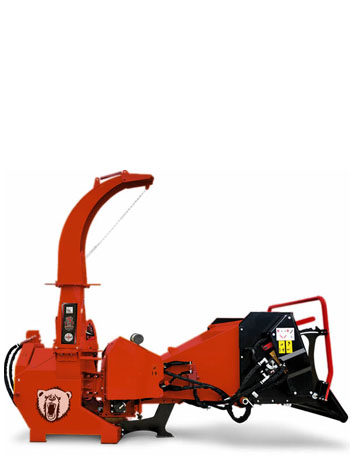
7 Reasons to buy a Grizzly Wood Chipper

A head of an angry Grizzly Bear

1.      Grizzly wood Chippers are made in Canada and are exported to the USA, South America, Northern and Southern Europe, Australia and now Africa

2.      Grizzly Wood Chippers adhere to the highest EU safety specifications

3.      Grizzly Wood Chippers standard with a 2 year warranty on all parts excluding wear parts

4.      Grizzly Wood Chippers are easy to maintain with most parts available locally

5.      Grizzly Wood Chippers are rugged, extremely well made, commercial grade wood chippers at prices comparable to lighter duty machines

6.      Double hydraulic feed rollers controlled by an Intellifeed system that controls roller, chipping speed and direction of travel of the rollers

7.      Oversize heavy duty rotor and reversible chipping blades are at the heart of the Wallenstein chippers. The large diameter rotor has a faster tip speed for improved chipping action and the heavy gauge steel keeps your momentum to power through

178 mm Diameter Capacity Hydraulic feed hopper with Intellifeed PTO Driven chipper Grizzly Chipper

178 mm Diameter Capacity
Hydraulic feed hopper with Intellifeed
PTO Driven chipper
Grizzly Chipper BX72R 180

Scanwood solutions logo.