Avocado root rot control program

This work was motivated by the presentations given by Elizabeth Dann at the SAAGA research symposium and phosphonate workshop held in February 2017.

Compiled by Nico Claassens & Elsje Joubert

Reviewed & improved by Stephan Schoeman & Henk Kuperus

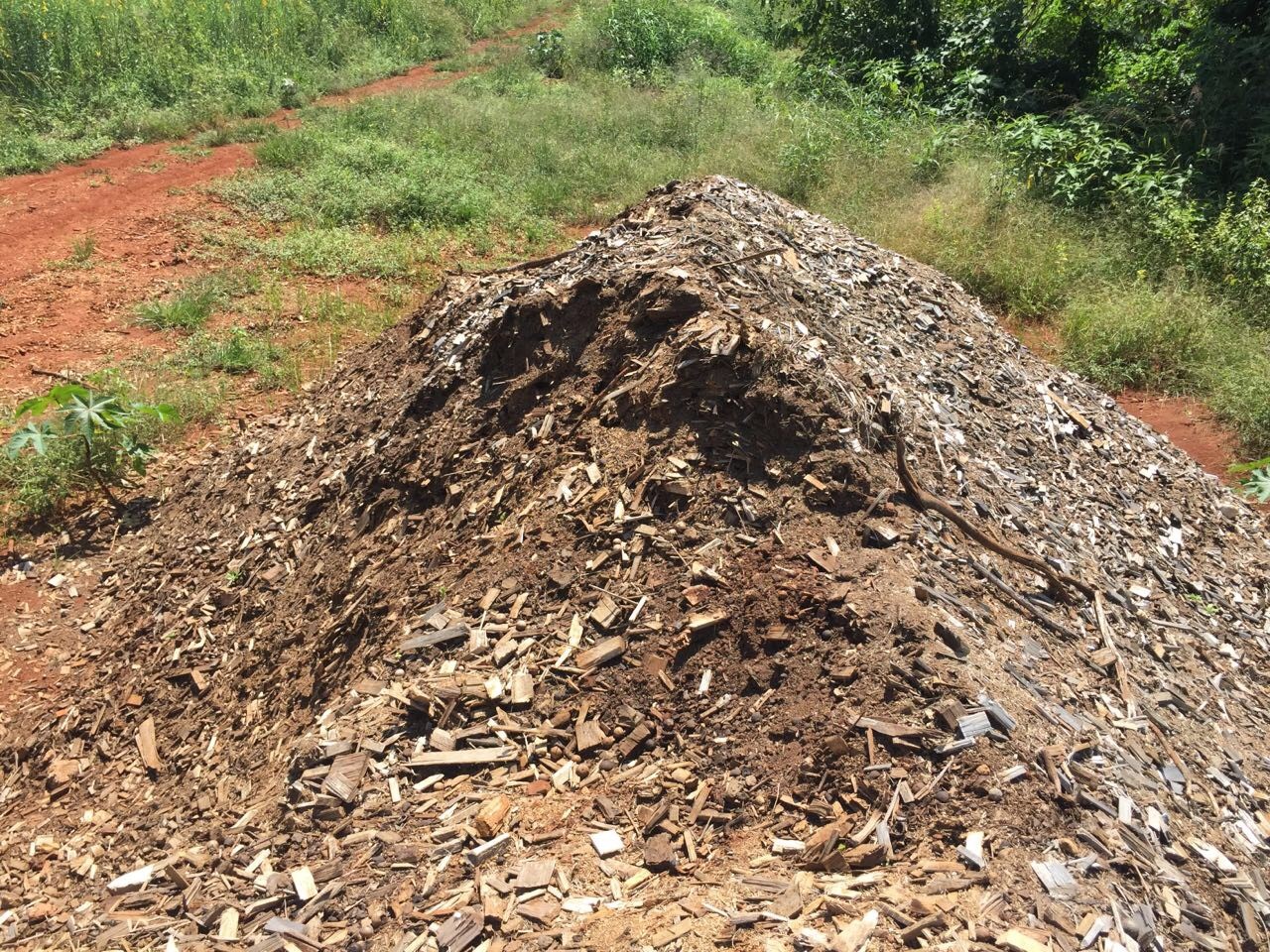
Avocado fruit Elsje Joubert Avocado root flush Elsje Joubert Compost heap Elsje Joubert Cover crops Sunhemp Elsje Joubert Healthy avocado nursery tree Elsje Joubert Healthy avocado roots Elsje Joubert Size of Cover crops Sunhemp Elsje Joubert Tree injection Elsje Joubert Windbreaks Elsje Joubert

1. New Plantings
1.1 Soil preparation 1.1.1 Do a deep cross-rip of the new orchard.
1.1.2 Do soil pH (KCl: 5.0 – 5.5 or H2O: 5.8 – 6.2) correction according to soil analyses.
1.1.3 Adjust kation balances at least 3-6 months prior to planting. Ca(60-75%): Mg(15-20%): K(5-12%)
1.1.4 Do a phosphate correction to a depth of at least 60 cm.
1.1.5 Constructing ridges of 40 to 70 cm high x 2.5 m wide at the top on a 8 m row spacing.
1.1.6 Plant legumes (nitrogen fixing plants) or certain mustards as biofumigants.
1.1.7 Aim to improve the soil organic matter content by planting green manure and working it into the soil at least 3 months prior to planting or by the addition of compost, manure or continued application of liquid carbon. Mix compost / kraal manure into the soil to maintain good soil health through the continuous introduction of organic matter in the vorm of organic acids / manure or chips. Ground covers will help to stabilize the soil. Try to establish cover crops between the rows and do not apply raw manure to young trees.
1.1.8 Plan rows to allow for drainage, respect and use natural water sources, and if necessary, apply underground drainage, make watertrenches to avoid any surface water accumulation.
1.2 Planting of trees 1.2.1 Plant holes should be squired off by a spade. Ensure trees are not planted too deep / shallow.
1.2.2 Mix composted organic matter with the planthole soil before closing the hole again.
1.2.3 Paint the stems of the trees before planting with a potassium-, aluminium- or ammoniumphosphonate (or foliar application) and then paint the tree stems with a diluted white PVA paintmixture.
1.2.4 Always follows the products applied recommendations and only use registered products
1.2.5 Plant according to avocado planting recommendations supplied by the nursery.
1.2.6 Only plant certified trees with root rot resistant rootstocks such as Dusa or Bounty as clonal rootstocks and Velcick as a seedling rootstock.
1.2.7 Apply an organic mulch at least 1m around the tree without closing up the tree stem. The organic mulch may also form part of the retaining wall to consentrate the irrigated water around the tree which keeps the soil cool, reduce weed growth, prevent crusting and improve the soil.
1.2.8 First irrigation water should consist of a mixture of cytokinins and bascillus simbiotics to stimulate root growth and improve root and soil health. Repeat the  treatment every three months for the first year of planting.
1.3 After planting care 1.3.1 Irrigation water should be concentrated in the basin of the trees for at least the first 6 months to ensure the planting medium is wetted as well during irrigation without over irrigating the surrounding soil. If a irrometer is used to schedule  the irrigation there should be one placed into the surrounding soil and into the potting mix for the first six months or until the roots has grown into the surrounding soil. Make sure not to manage young trees too wet or not too dry.
1.3.2 Apply potassium- or ammonium phosphanate in the soil (as per label as soil drench, leaf or stem paint treatment) in the first two weeks after planting. Repeat every three months or replace it with a suitable biological product.
1.3.3 The trees should be sprayed monthly with products that contain both all relevant plant nutrients as well as plant stimulants such as cytokinins and auxins.
1.3.4 Spray or paint the stems monthly with Fosetyl-Al at 3.75g/? water for at least the first six(6) months.
1.3.5 Protect the tree against adverse enviromental conditions (sunburn and frost damage) by sparaying it regularly with a coaline product and or anti-stres products.
1.3.6 Fertilise the tree on a regular basis with fertiliser that contains N.P.K +Mg and with micro-nutriënt products such as zink and boron. There are products such as Ghwamis / controled release from Haifa that contains all this nutrients and is applied only ones a season for the first three years. Alternative: SAAGA mix – dry mixture of 3 parts KAN, 2 parts MAP and 1 part KNO3. Apply 20g SAAGA mix per tree for the first 18 months.
1.4 Pest & disease control 1.4.1 Enclose the trees individuely or the total planted area to protect the trees against antilope and other vertibra annimals.
1.4.2 Monitor regularly for the  locasts, beetles, termites and thrips that might damage the trees. Use a suitable registered product when neccassary.
2. Replant of Avocado’s: Adhere to all above mentioned points and give special attention to the following points.
2.1 Apply kraal- or chicken manure at least two months before planting on the plant rows and work it in.
2.2 Apply mulch under the trees after planting with a good quality mulch at least 1meter diameter around the tree.
2.3 Use a microbial soil conditioner to stimulate the soil microbes and to protect the trees against phytophthora infestations.
2.4 NB! The trees must be established on ridges to ensure good drainage and aeration of the soil. It is essential for root growth and health.
2.5 Intensive care must be taken to ensure good root growth and soil health for the first year after planting.
3. Non Bearing trees
3.1 General 3.1.1 Treat the soil against P.c. spores with metalaxyl at the beginning of the season and repeat the treatment six months later or use a biological soil conditioner six weeks after the metalaxyl treatment and repeat after three months.
3.1.2 Paint or spray the tree stems with a potassium-or ammonium phophate product every three months.
3.2. Trees with P. c. 3.2.1 Apply metalaxyl at the start of the season to the soil (according to tree age). After every metalaxyl treatment a biological soil conditioner should follow.
3.2.2 Paint or spray the tree stems with a registered potassium- or ammonium phosphanate product every two weeks
3.2.3 If the stems are thicker than 30mm it can then be injected with a single 20ml dosage of a suitable potassium- or ammonium phosphanate product, every 6 months. Injections should only be done as a last resort.
4. Bearing Trees
4.1. P.c. Already present 4.1.1 Inject the trees twice a season with a registered potassium- or ammonium phophanate prduct. Take care to ensure the prescribe MRL levels would not be exceeded at time of harvest.
4.1.2 First injection of the season should occur directly after fruit set.
4.1.3 Second injection four months later. The second injection should not be closer than 100 days before harvest.
4.1.4 Pick all the set fruit from infected trees to reduce the stress on the tree and treat it. Heavy invested trees should not be allowed to have fruit on because it slow down the recovery proses.
4.2. Maintenance 4.2.1 Only one series of injection per season after fruit set, usually in spring
4.2.2 Follow up with two leave sprays with a registered potassium- or ammonium phosphante product with a 90 day interval between sprays. Three months after the injection. Leaves flush must be semi matured. No more reddish leaves. Use with a penetrater product for best results.
5. General practises to maintain good root health
5.1 Soil should always be well aerated and drained with no compacted layers up to  a depth of 1000mm.
5.2 Always plant on ridges if possible to ensure good drainage and soil erasion.
5.3 Irrigation scheduling should always aim to induce oxygen into the soil profile as well, not just for applying water.
5.4 Increase the organic compound of the soil for improved aeration and microbial activity. Apply organic mulch around trees where there is no natural organic layer present for instance young newly planted trees or trees that lost its normal leave mulch deu to P.c infestation.
5.5 Keep Calcium(Ca) levels optimum. Base saturation should be between 65% to 75% depending of the soil texture.
5.6 Boron is also essential for root health and growth. Apply regularly small amounts through the irrigation or twice a season every six months with a slow release boron product.
6. Water & irrigation systems
6.1 Do a water test to determine the mineral as well as the pathogenic content. Attached is the water standards regulations.
6.2 Ensure the irrigation system is suitable for avocado irrigation and fertigation so that fertigation can be done through the system.
6.3 Use soft acid products to clean the system from salt and mineral layers and particles on a regular base.
6.4 Hydrogen peroxide shoiuld be used on a continious base to ensure the water and irrigation pipes stay clear of organic films and can be pathogen free.
6.5 Use irrometers to do irrigation scheduling.  Also use a soil auger to monitor the irrometers and irrigation shedule.

Delivery of Grizzly Chippers to Pecan Country

It was the middle of July, on a cold winter’s morning.  Scanwood Solutions delivered two Grizzly chippers to Nutmech in the heart Pecan Country in the heart of the Vaalharts Irrigation Scheme.

Nutmech had arranged the sale, subsequent delivery and demonstration of two models of Chippers, the Grizzly 180 (http://www.scanwood.co.za/products/Grizzly-Wood-Chippers/Grizzly_Chipper_BX72R_180-woodchipper.php) and the Grizzly 250 (http://www.scanwood.co.za/products/Grizzly-Wood-Chippers/Grizzly_Chipper_BX102R_254-woodchipper.php). The chippers were demonstrated using Kubota orchard tractors. The wood supplied was freshly hedged Pecan Nut. James Pitout of Scanwood Solutions was on hand to provide product knowledge and training on the two models on display.

The farmers were impressed with the chipping ability of the chippers. One asked me if it could keep up with his staff feeding wood into the chipper. I replied by saying his staff wouldn’t be possible for his staff to overfeed it.

Farmers’ comments about the chipper included many remarks on the rugged build of the chippers; the ease of maintenance as well as the affordability thereof. They also appreciated the availability of spares in South Africa and the three-year warranty.

The success of the day was revealed in the sale of two further chippers during the demonstrations.

grizzly-180-pdi-nutmech-2y

News: The online shop

Presenting the new ABC online shop.

ABC Hansen onine shop example

Hippo Mills – an Original Story of The Great Age

In the fall of 1928 the Hippo hammer mill was officially launched at the Royal Show in Pietermaritzburg, capital of Natal, Province just three years after the Prince of Wales opened the show in 1925. The mill was named after Hubert the hippo who caused big scale damage to crops in the area.

This was a time when the motor car was just becoming fashionable and Che Guevara was born and several years before Coca Cola arrived at African shores.

Many small changes has brought the Hippo to a full range of nine sized mills from 4kW to 110kW. However it still remains a cast iron mill, the same as Arthur Collins launched 88 years ago.Hippo hammer mill close up


Textured soy protein (tsp) part ii

Soy bean used in oil expelling

As you read in part 1 of this blog, we discussed the current desire to eat healthier which has resulted in an increased demand for textured soy protein (TSP) as a protein replacement due to its affordability and ability to blend well. In part 2, we will discuss what items you need to produce TSP as well as current market trends. There are two very different approaches to produce TSP and Insta-Pro can help you with either option that makes sense for you. First, is to mechanically process your own soy ingredient utilizing the ExPress® system. The second is to purchase solvent extracted soybean meal or flour. I will walk you through both and their trade-offs.

Mechanically Processed ExPress Meal
In order to produce TSP, you must have the proper equipment and ingredients to ensure a quality end product. If you are using a mechanical process to make it, you will need a dehuller, in addition to the Insta-Pro High Shear Extruder, Insta-Pro press and cooler along with additional support equipment. The extruder and press are used to extract oil, then the product is cooled. At that point the soy is prepped for the Insta-Pro TSP extruder, cut, dried and cooled. The advantage of this approach is that soy still has 6-8% oil and it has been prepared by the high shear extruder giving it a superior taste and mouth feel. The challenge to this approach is it is a higher investment. If you currently have an ExPress® plant (Extruder + Press = Oil and Meal), you can more easily include additional equipment to process TSP at a lower capital investment.

Read more at insta-pro.com

Textured soy protein (tsp) part 1

Soy bean used in oil expelling

The current desire to eat healthier has increased the demand for textured soy protein (TSP) as a protein replacement due to its affordability and ability to blend well. There are many ways TSP can be used, but the two most common uses of TSP are: meat extender and meat replacement. A meat extender is typically used as an additive to other meat products, such as sausages, hamburgers, fish, etc. TSP as a meat replacement can be consumed to provide amino acids whenever meat may not be available or preferred. While meat replacement is a product comprised solely of TSP, meat extender is more commonly used than meat replacement. According to a short course at the Texas A&M University, the market seems to be larger for meat extender than meat replacement. Meat extender possesses around 70% of the market, leaving meat replacement with only about 30%.

Making good quality TSP is important, but measuring quality is very controversial, and experts have many diverse opinions regarding what this entails. Everybody tends to agree that absorption capacity is a key item for quality and a good industry average for absorption capacity is around 300-400%. Some countries prefer TSP made from soybean meal flour (flour obtained from a solvent extraction process) which has very little fat, normally around 1% or less. Some countries request soy containing 45% protein while others require at least 50%, but this differs based on the quality of the soy rather than the process. Other countries prefer TSP made out of flour from mechanical process (referring to extruder + press) where the fat is around 6-8%. The problem some encounter is that not all extruders have the capacity to make TSP from a flour of 6 to 8% fat.

In order for TSP to look more appetizing to the consumer, there are several colors that can be blended in to give it the appearance of the meat it is added to. The most commonly used color is caramel, but pink is also used very often since it’s easier to mix with sausages and hamburgers. Yet, in Asia, they prefer their TSP to be as light as possible to mix it in with fish.

At Insta-Pro International, we have been making TSP from flour of 6% – 8% fat for many years and can assist with this process worldwide (excluding the United States and Canada). Another thing that people consider in the quality of TSP is its shelf life because of the limited resources some places may have to replace it. TSP made with our machines and processes has been proven to last around 1.7 years which is the industry average shelf life/storage conditions.

Read more at insta-pro.com

Milling and dust

Dust generated by a mill

For smaller mills, and especially mills like hammer mills that runs at high RPM, dust is one of the biggest problems for a milling enterprise.

It’s not only a health hazard to those working with the machine and in its surrounds, but it wastes a great deal of product and it may be the cause for really serious accidents such as dust explosions.

Dust simply extracted from the premises creates other problems when it gathers on roofs, causing rust and rotting on roofs and  gutters, down pipes and generally soiling the environment. It is also unsustainable when having neighbours in an industrial area.

Dust is generated in many areas of a processing unit, especially with dry products such as at cleaning / separation, conveyance, unloading from trucks, intake dump pits into silos or bins, at intake into a mill, at milling output, at loading pellet mills, at various screening centres, at aspiration centres, at packing areas.

Dust generated by a mill 2

The best way is to start correctly, at design. If already with the problem, it’s best to start where most dust is generated and work you way back to the smaller problem areas.

Much innovative design turned Hippo hammer mills from a massive dust generator since 1928 right through to the past few years when this issue was prioritised by ABC Hansen , into a dustless hammermill through the following measures:

  1. Input control mechanism whereby intake is regulated as airflow is restricted when the screen is filled, thereby not overloading the cyclone and ducting creating more back pressure. This mechanism also serves to limit back-splash to an almost unperceivable level.
  2. Re-design of cyclones for higher efficiency. Custom designed cyclones can be produced for specific products if the standard cyclone is not efficient enough. The correct cyclone design creates no dust at bag-off and actually creates an inverted air flow back into the cyclone from the bag.
  3. Simple mechanical airlock valves without any electric drive at bag-off point – especially suitable where the product flows directly into a conveyor or air pick-up for further processing.
  4. Dust manifolds with sufficient filter bags to avoid back pressure that can be easily cleaned and all dust recovered.

Why should you store your grain yourself?

A photo showing a farm silo in South Africa

A Silo Complex in South Africa

Farm storage has become more popular over the past 20 years in the South African context – where farmers have been putting up more and more of these on-farm storage silos for the following reasons:

  1. To become more independent from the large agricultural companies – by being able to take their grain to market at a time and a price that is convenient for the farmer
  2. By being able to store a portion of their grain for their own use – most farmers are mixed use – being both crop farmers and cattle or sheep – so the farmers is able to keep a portion of his crop back – safely without the risk of storage losses – to feed his own animals during winter or to improve their condition
  3. To save on transportation costs – instead of having the cost of transporting the grain from the farm to the silos in the nearest town, the grain can be stored on the farm itself, and then the buyer of the grain will send his own trucks to collect the grain from the farm – basically cutting out the entire transport cost for the farmer.
  4. To be able to get the crop off the field quicker and with less waiting time – saving time and money. The biggest complaint from farmers delivering to large silo complexes during harvest season is the waiting time at the silos – where their trucks are standing in line, waiting for their loads to be graded and unloaded into the silos – precious time that puts a hold on the harvesting rate on the farm – costing extra time and extra money – the quicker the farmer can get the crop off of the field, at the time that is right for him – the better his yield will be, and the quicker he’ll have his money in the bank.
  5. The silo projects are easily financeable with traditional bank loans or with rent to own financing options making initial capital expenses much lower and the project much more viable.
  6. The payback of capital with the savings on just the above 3 factors are on average 5 years. After that the farmer laughs all the way to the bank.

ABC Hansen has been putting up on-farm grain storage facilities for farmers in sub-Saharan Africa for the past 16 years – helping farmers and grain traders becoming more efficient and more independent.

Rural agricultural development in Africa

A photo of an irrigation system on a farm in Africa

As an equipment manufacturer and supplier, ABC Hansen Africa, based in Pretoria South Africa with subsidiaries in Zambia and Namibia and dealers throughout the continent, strives to contribute to the mechanisation part of the African agricultural renaissance through:

  • Irrigation: With only 4% of African crops under irrigation, this represents a vast area for advancement and improvement of yields and offering a lower risk for the indispensable providers of credit. Low delivery technology combined with high control technology and with solar applications are designed supplied at low cost for irrigation of fields of 1-10 hectares.
  • Provision of affordable power and technology to augment the human power currently employed in virtually every aspect of the pre-harvesting effort. At present Chinese Jiang Dong diesel engines are the most affordable, dependable, easiest serviceable and operational engines available provided a servicing network exists. This ABC Hansen offers in training local dealers in these maintenance functions. These engines are used in powering various types of equipment produced by the company in areas where electrical power supply is not sufficient or non-existent such as for:
    • No-till planters
    • Sprayers for herbicides
    • Universal harvesters (shellers) for maize, wheat, sorghum, rice, soy beans and other beans, sunflower etc. allowing the crop to get to market faster, fresher and before it is damaged.
  • Brand new high kilowatt tractors are not going to do the trick at this inception stage and at the scale of traditional agriculture units. It’s simply not affordable and can’t be paid back on the yields of a 10 hectare parcel of land, much less on a 1 or 2 acre plot. Needless to mention its running cost and maintenance. On the other hand manual planting is a disaster because of uneven spacing, uneven planting depth, overgrowth, irregular fertilizer application, etc.
  • Post harvesting activities that include storage, drying and cleaning of grain. These basic activities, if done correctly and viably, would increase the crop percentage reaching the market by some 20% and again allow financing to become a reality. Options for mass storage in converted unseaworthy shipping containers, regular steel silos, grain dams, silo bags and flat storage in converted sheds and other options are available to the small scale farmer over and above the costly and inefficient bagging system currently followed.
  • The further processing of grain and oil seeds such as milling of maize, sorghum etc. for human and animal / aquaculture consumption and further processing including oil expelling, extruding, pelleting, fermenting, roasting, flavouring and colouring, packaging and bringing final products to market for integration into the value chain and feeding the ever expanding mega cities.
  • The creation of food hubs where maize, wheat / sorghum / millet and feed mills, oil seeds processing, bakeries, vegetable and fruit processing, meat processing from farms supplied with feedstocks, all takes place under one roof and where these products are made available for retail sale together with a restaurant where hot meals can be served at low cost to ordinary working people.
Sorgum grains

Sorgum

Not only do these actions retain value in rural areas, and enhance the possibilities for credit to be extended, it also employs and empowers small farmers and others, fosters entrepreneurship and allows a secondary, industrial renaissance to take place, built on this first, agricultural turnaround. Less workers on the farm producing higher total and per capita output for the now productively employed urbanites engaged in commerce and industry is what has been the key in the development on continents to the east and west of Africa.

ABC Hansen Africa is not a development consultant and neither a NGO or policy influencing organisation, all playing a very important role in the march towards the African agricultural renaissance. It is a private engineering company able to get things done that needs to get done through design of appropriate equipment, incorporation of existing equipment in new products and installation, commissioning and servicing projects in the agricultural landscape, with a mission to chip away at obstacles to advancement in our continent.

Small scale farming – Mechanization

View of a farm in africa. Half is already harvested.

The world population will grow from 7.3 billion to 9.7 billion in just 34 years from now, 100 million more persons than was estimated in the United Nations’ estimate of 2014. At least 50% of this growth will stem from Africa whose population is expected to double to 2.5 billion. Nigeria’s population would be over 400 million and the DRC and Ethiopia would rise to almost 200 million each.

While many advances in technology has, and will increase the yield in the traditional commercial agricultural countries, Africa is the only continent with excess capacity of arable soil as well as large water resources which are presently not fully utilised.

In fact, available African arable land represents an amazing 60% of world arable soil, according to “The Economist” most of which is offering negligible yields. While African agricultural output has risen fourfold since 1961, in line with India, it has been mainly due to cultivation of new land and yields have remained poor. An increased 800,000 square kilo meters of arable land has been added to the 1.5 million under cultivation in 1960 in sub-Saharan Africa according to the UN.

Many factors including geological (water, soil fertility), technological (seeds, fertiliser, farming practice), political (corruption, subsidies and lack thereof, taxes, restrictions), commercial (lack of credit and capital, marketing skills, transport, market structures) etc. are to blame. However Africa would need to develop its agriculture in a hopefully harmonious blend between two options:

  1. Higher productivity due to commercial large scale farming with (forced?) removals and other social consequences which may limit the extent politically. In some countries widespread discontent with resettlement of small farmers to create room of large commercial projects disturbs local, tribal and eventually national politics. Large scale agriculture should lay the cornerstone of an awakening, creating infrastructure, building dams, establishing storage, providing access and a local market for seed and fertiliser with spin-offs to the small scale farmer.
  2. Enhancement of the productivity of the small scale grain farmer through sustainable (read affordable as further described below) mechanisation based on no-till farming methods, improved seed supply (a resolution of the GMO and “Round-up ready” debate and development of high yielding varieties are the key aspects), proper application of herbicides, extension services, fertiliser application (an average of only 15kg fertiliser per hectare is used in Africa vs 150kg globally excluding Africa*), formalising of the market with futures, (allowing a better return for the farmer), negotiable warehouse receipts / silo certificates, mixed farming strategies, positive political involvement, de-regulation of the market and in cases regulation such as grading rules, fumigation, correct storage, drying etc. and those two all-important levers to get the ship into the water – credit and insurance – at decent terms and rates.

Various government programs, NGO’s and foreign assistance project focus on some of these bigger issues while agricultural engineering and mechanisation at the footsole level is often wanting.

A photo of a few rural farming people in Africa